
Battery shipping from China is possible by air, sea, international express and selected cross-border truck routes. E-Quicky first checks chemistry, watt-hours, configuration, condition, packing, documents and destination because a power bank, e-bike battery, battery-powered tool and carton of replacement cells require different handling.
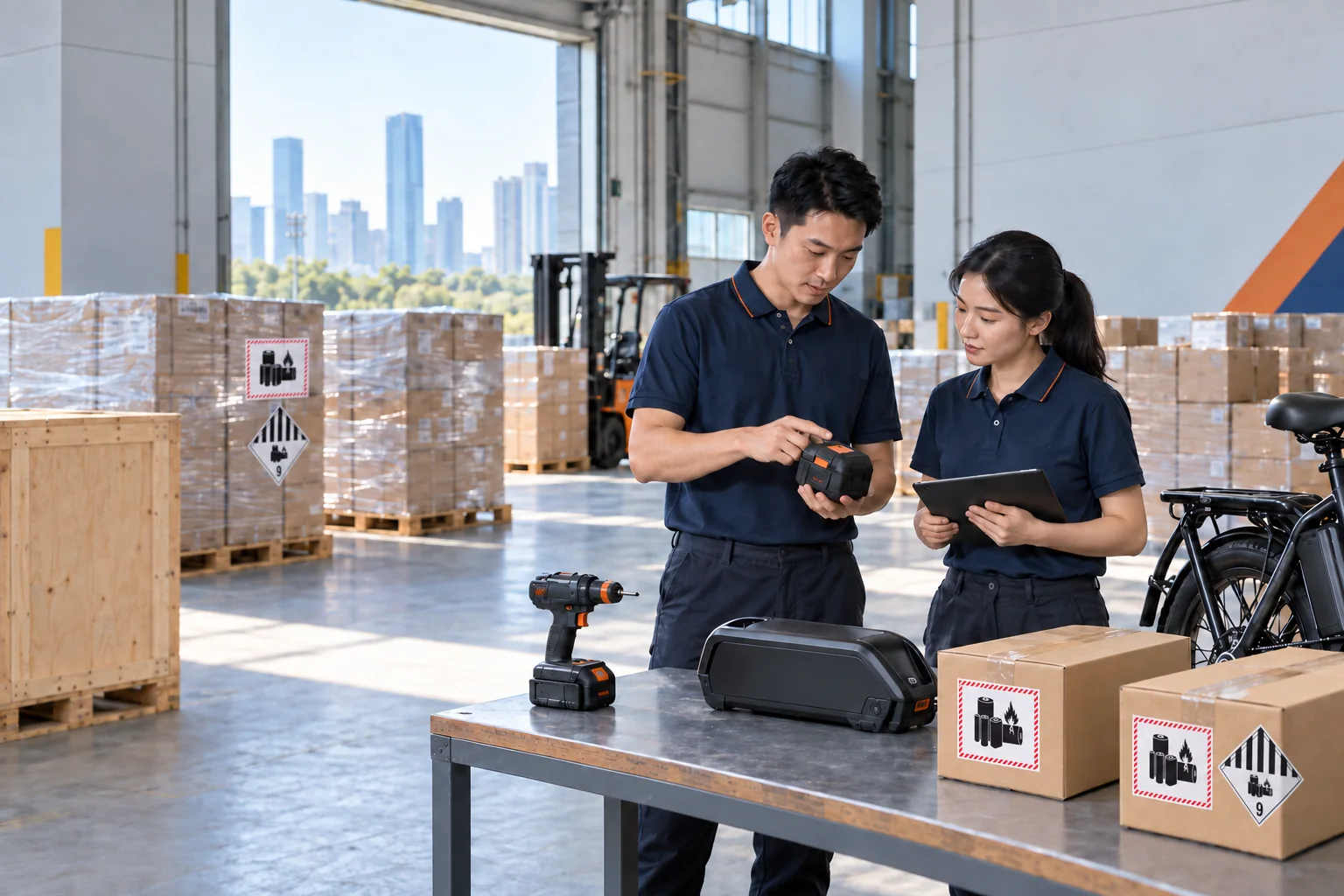
1. Classify the Battery Before Choosing a Route
Start with chemistry, then identify whether the battery travels alone, with equipment or inside equipment. Only then compare transport modes.
| Commercial description | Typical examples | Transport information to confirm |
|---|---|---|
| Lithium-ion batteries | Power banks, rechargeable tool batteries, e-bike batteries, laptop batteries and energy-storage modules | Battery or cell, model, nominal voltage, ampere-hours, watt-hours, battery net weight and UN 38.3 test summary |
| Lithium-metal batteries | Primary cells for sensors, instruments, trackers and industrial devices | Lithium content per cell and per battery, model, configuration and UN 38.3 test summary |
| Sodium-ion batteries | Rechargeable cells, standalone packs and equipment powered by sodium-ion batteries | Organic or aqueous electrolyte, watt-hours, configuration, test summary and applicable UN number |
| Lead-acid and other chemistries | Automotive, backup-power, industrial and specialist batteries | Spillable or non-spillable status, electrolyte, test evidence, SDS and carrier-specific acceptance |
| Battery-powered products | Drones, tools, scooters, electronics, medical devices, toys and machinery | Installed batteries, spare batteries, accidental-activation protection and exact battery data for every model |
Common classifications include UN 3480/3481 for lithium-ion batteries, UN 3090/3091 for lithium-metal batteries and UN 3551/3552 for sodium-ion batteries. Power banks supply power to another device, so the IATA 2026 Battery Guidance Document treats them as batteries rather than batteries contained in equipment.
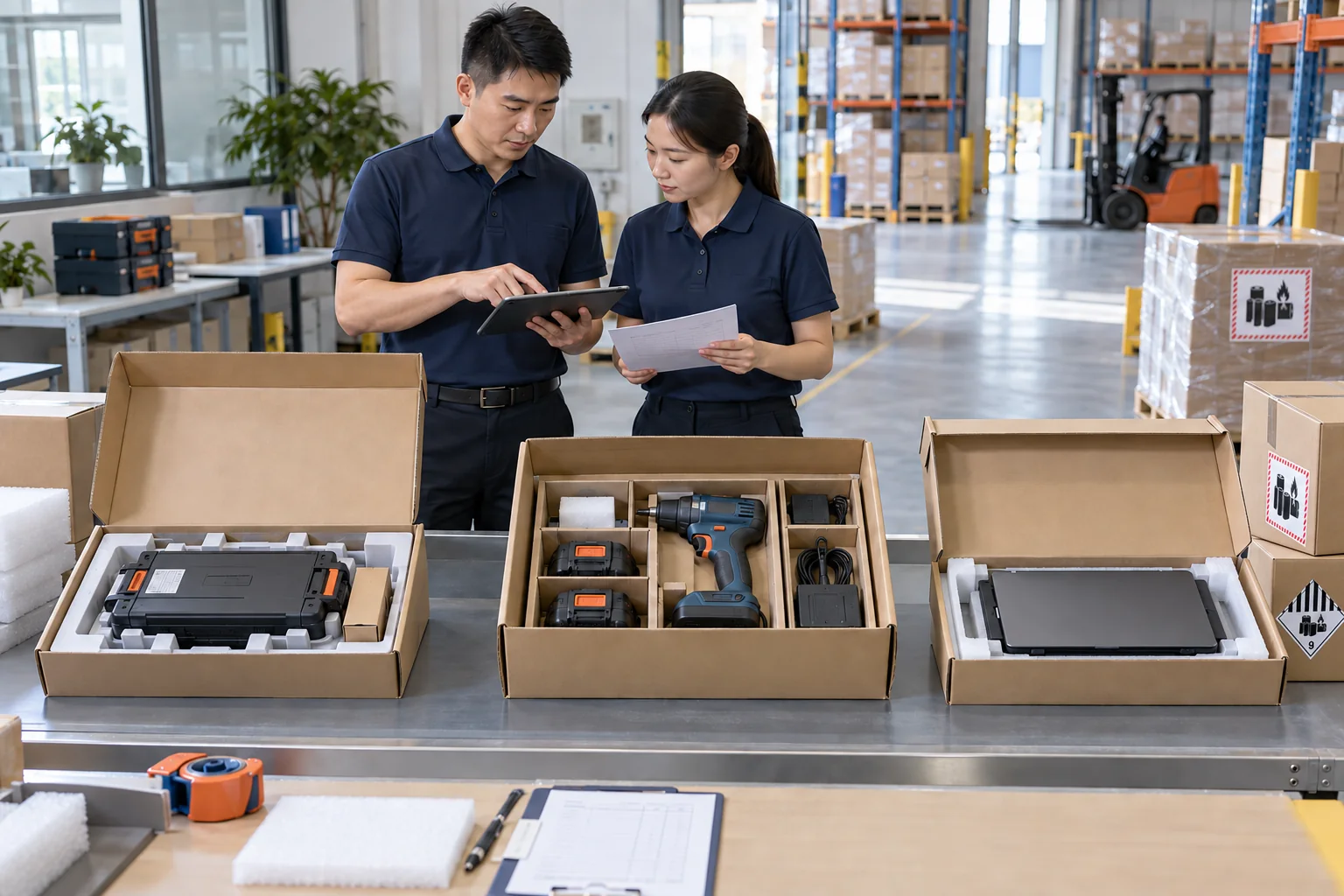
2. What the 100 Wh Threshold Changes
Calculate watt-hours as nominal voltage multiplied by ampere-hours: 14.8 V × 6 Ah = 88.8 Wh, while 48 V × 12 Ah = 576 Wh. Use manufacturer data. The 100 Wh threshold changes the applicable provisions; it does not remove testing, packing or carrier-acceptance requirements below that level.
3. Battery Shipping Documents to Prepare
A complete file lets the forwarder classify the cargo, compare routes and avoid re-packing. An SDS does not replace the UN 38.3 test summary, and neither replaces shipment-specific transport documents.
| Document or evidence | Purpose | Practical check |
|---|---|---|
| UN 38.3 test summary | Shows that the tested lithium or sodium-ion cell or battery design has passed the applicable transport tests | Manufacturer, laboratory, report ID, test date, chemistry, mass, Wh or lithium content, model numbers, tests and results should match the actual battery |
| SDS or MSDS | Describes chemistry, hazards, handling, storage and emergency information | Model, manufacturer and chemistry should be consistent with the specification and test summary |
| Battery specification sheet | Confirms model, nominal voltage, ampere-hours, watt-hours, lithium content and battery weight | Do not submit a generic family specification if the shipped model is not clearly covered |
| Commercial invoice and packing list | Supports export, import and cargo planning | Use a precise product description; show battery-powered status and accurate carton, weight and value data |
| Product and package photos | Help verify battery position, spare batteries, inner protection, outer cartons, pallet condition, marks and labels | Photograph the actual packed shipment, not only a catalogue image |
| Air Transport Conditions Identification Report | May be requested by the selected mainland airport, airline or acceptance channel | Confirm validity, model coverage and whether the report is accepted by the intended departure channel |
| Dangerous goods transport documents | May include a Shipper’s Declaration for Dangerous Goods, air waybill statements or sea dangerous-goods documents | Prepared by a trained party using the actual route, UN number, proper shipping name, packing instruction and package quantity |
| Dangerous Package Certificate | Required by E-Quicky for batteries above 100 Wh departing mainland China by any accepted channel, including air, sea and truck | Confirm before packing; the certificate must correspond to the battery, packaging and dangerous goods offered |
Every document must identify the same battery model and packing. China Customs publishes the official procedure for export dangerous-goods packaging use appraisal.
4. Mainland China or Hong Kong Departure?
Choose a mainland China or Hong Kong departure only after confirming the battery, documents, destination and available carrier capacity. Hong Kong is a separate aviation jurisdiction, not a way to avoid declaration.
| Review point | Mainland China departure | Hong Kong departure |
|---|---|---|
| Origin handling | Direct delivery to the selected mainland export warehouse or airport acceptance point | Cross-border transfer from mainland China to the Hong Kong handling facility before flight |
| Identification report | An Air Transport Conditions Identification Report may be requested by the selected airport, airline or channel | The mainland report is not automatically the governing acceptance document; Hong Kong and operator requirements apply |
| Battery power | The ≤100 Wh or >100 Wh status must be confirmed early. Above 100 Wh requires a Dangerous Package Certificate under E-Quicky’s mainland departure requirement | E-Quicky can review selected batteries both at or below 100 Wh and above 100 Wh, but packing and operator acceptance change with rating and configuration |
| Best use | Efficient when a suitable mainland airline or channel accepts the exact cargo and documentation | Useful when Hong Kong provides a practical operator, schedule, destination or battery-acceptance option |
| Final decision | Route, airline, transit points, package limits, state-of-charge rules and operator variations must be confirmed before booking | |
The Hong Kong Civil Aviation Department requires correct classification, packing, marking, labelling and documentation; carrier approval is still required.
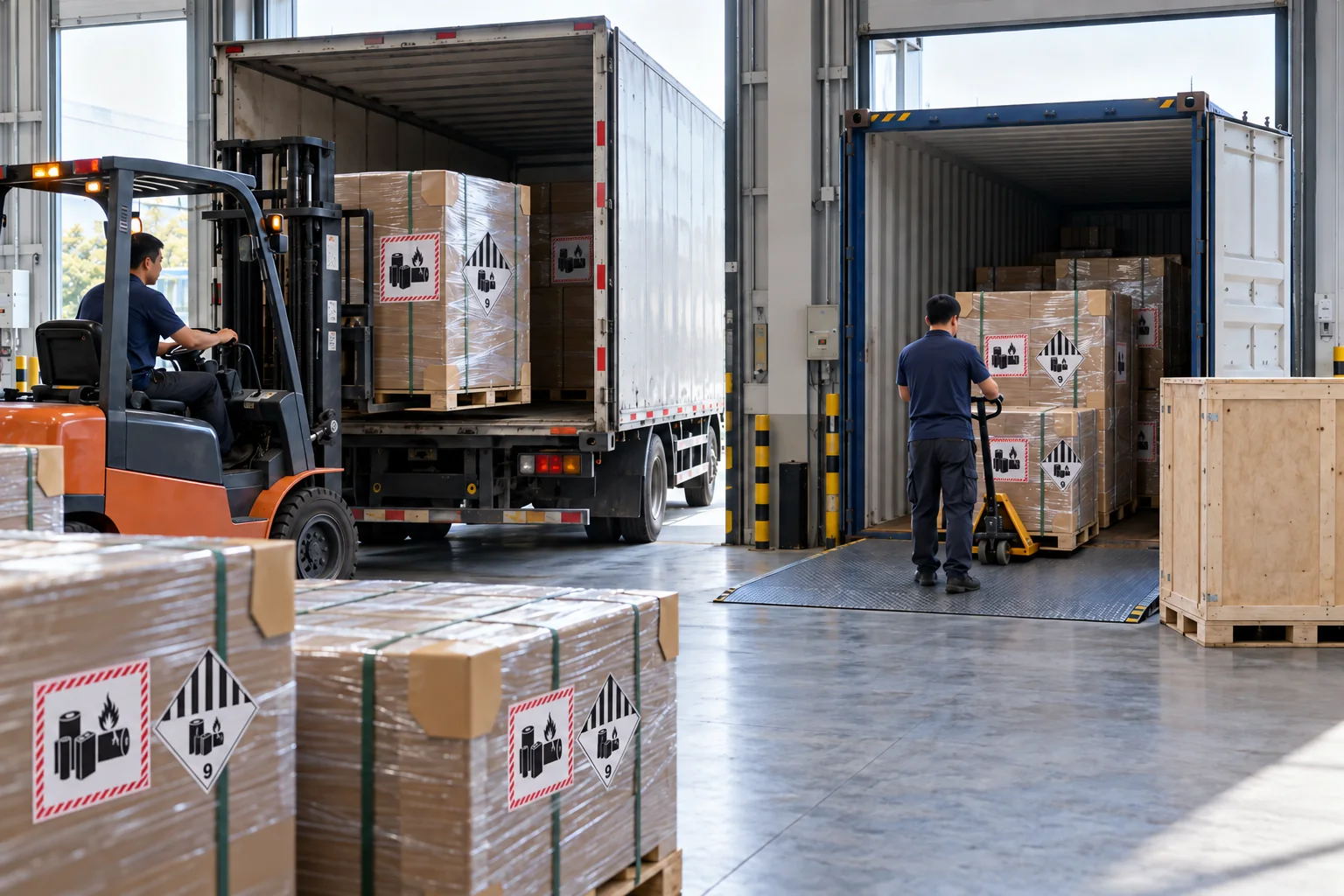
5. Battery Air Freight from China: Route and Acceptance Process
Before requesting space, E-Quicky confirms the packing instruction, departure gateway and airline/aircraft combination that accepts the exact cargo.
| Shipment configuration | What changes in air transport | Information needed before booking |
|---|---|---|
| Standalone lithium-ion batteries UN 3480 / PI 965 |
Passenger aircraft are not permitted. Above 100 Wh falls under Section IA; at or below 100 Wh may fall under Section IB when every condition is met. | Model, watt-hours, state of charge, battery net weight per package, UN 38.3, SDS, packing details and mainland appraisal documents. |
| Lithium-ion batteries packed with equipment UN 3481 / PI 966 |
The batteries share a package with equipment but are not installed. From 2026, Section I batteries must not exceed 30% state of charge; in Section II, this applies above 2.7 Wh unless State approvals are obtained. | Equipment and battery quantities, spares per carton, watt-hours, battery net weight, state of charge and internal packing. |
| Lithium-ion batteries contained in equipment UN 3481 / PI 967 |
The installed battery must be protected against damage and accidental activation. A maximum 30% state of charge, or 25% indicated capacity, remains an IATA recommendation for PI 967. | Product and battery model, units per carton, batteries per unit, watt-hours, activation protection and package photographs. |
| Lithium metal, sodium-ion or another battery type | Different UN numbers, packing instructions, limits or aircraft restrictions may apply. Do not quote them as lithium-ion cargo. | Chemistry, lithium content or watt-hours, specification, applicable UN 38.3 evidence, SDS and packing configuration. |
How E-Quicky Moves an Air Shipment from Review to Acceptance
For destination-specific airport and delivery planning, see E-Quicky’s guides to air freight from China and Hong Kong to the USA and air freight from China and Hong Kong to the UK.
6. DHL and UPS Express for Standalone Batteries
Send the exact model, chemistry, watt-hours, quantity, battery net weight, UN 38.3 summary, SDS, carton dimensions, gross weight and package photos. Mainland batteries above 100 Wh also require the Dangerous Package Certificate review. Remote-area, residential, oversize and dangerous-goods surcharges may apply. See the DHL, UPS and FedEx international express guide for carton and billable-weight planning.
7. Sea Freight for Battery Cargo
Sea freight suits larger volumes and heavy battery packs. LCL and FCL remain subject to carrier, port, segregation, stowage and document acceptance.
Documents to Prepare before Sea Booking
- Invoice, packing list, precise product and HS data, origin, destination and importer.
- Dangerous Goods Declaration with the UN number, shipping name, class and package details.
- Container packing certificate, VGM, booking instructions and carrier approval.
- UN 38.3 summary, SDS, specification, model, energy rating, quantity and battery net weight.
- Mainland departures above 100 Wh also need E-Quicky’s Dangerous Package Certificate before booking.
The IMDG Code governs packaged dangerous goods by sea; Amendment 42-24 is mandatory from 1 January 2026. Air approval does not equal sea approval, and the carrier, port or transshipment route may add requirements.
DG Container Loading Points
- Inspect every package; exclude damaged, leaking, swollen, recalled or unmarked batteries.
- Use correct battery-specific outer packaging; keep marks and hazard labels visible after palletising and wrapping.
- Distribute weight evenly, block and secure movement, and protect packages from impact, heat and water.
- Check compatibility and segregation before mixing other dangerous goods; general-cargo loading plans are not enough.
- Record the container number, seal, loading photographs, package count and VGM; documents must match the cargo.
See the FCL shipping and cargo documents guide for the standard workflow; battery cargo adds dangerous-goods review.
8. Full-Truck Battery Transport and the Rail Restriction
Cross-border truck transport is an E-Quicky advantage. We arrange full-truck-load service for eligible standalone batteries, packs and battery-powered products to selected destinations in Europe, Russia and Central Asia. The consignee must clear the shipment and pay destination duties and taxes, so provide the address and importer details before routing.
9. Battery Packaging Checklist
Packaging must match the classification and packing instruction. A strong-looking carton is not automatically compliant. Before pickup, confirm these points with the party responsible for dangerous-goods preparation:
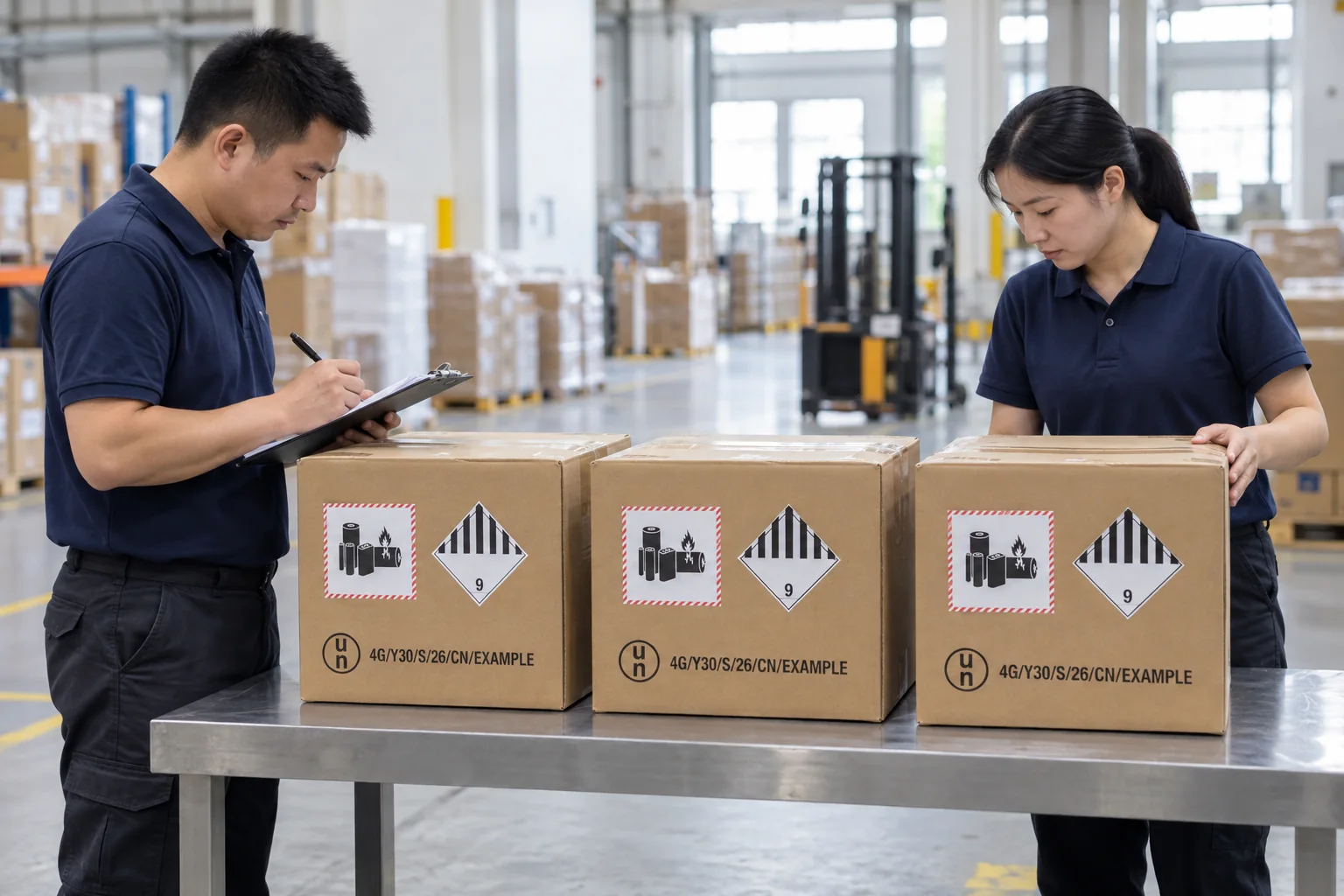
- Use tested batteries in good condition; isolate swollen, damaged, leaking or recalled units.
- Protect exposed terminals against short circuit with caps, insulating material or secure inner packaging.
- Prevent movement with non-conductive dividers, cushioning and rigid inner trays suitable for the battery mass.
- Protect equipment against accidental activation and use robust switch or button protection where needed.
- E-Quicky’s standalone-battery channels require battery-specific UN-specification outer boxes. Every carton must carry the valid UN packaging performance mark for that certified box design; a battery label placed on an ordinary carton does not make it a UN box. The exact box rating and supporting appraisal documents depend on the battery and route. Contact E-Quicky before purchasing boxes or arranging pickup.
- Keep required marks and labels visible, durable and unobstructed; do not invent or copy labels from another shipment.
- Use sound pallets, corner protection, stretch wrap and straps without covering required marks.
- Do not stretch-wrap a wooden export crate as if it were a carton pallet; inspect the crate structure, closure and any required wood-packaging mark instead.
- Ensure the final packed dimensions, gross weight and battery net quantity match the booking and transport documents.
10. What E-Quicky Needs for a Battery Shipping Quote
Every quotation should begin with classification. Send one consolidated file including:
For several battery models, provide a model-by-model breakdown. If E-Quicky will repack the goods, send factory-packing photos before pickup.
11. Common Mistakes That Delay Battery Shipments
- Using a vague cargo name. “Electronic accessories” is not enough when batteries are included.
- Confusing product capacity with battery watt-hours. Use battery-label and manufacturer data.
- Submitting incomplete or mismatched documents. The SDS does not replace UN 38.3 evidence, and every file must cover the shipped model.
- Ignoring spare batteries. An installed battery plus two spares can change the classification and packing instruction.
- Booking before packing and carrier acceptance are confirmed. Repacking or refusal changes dimensions, cost and departure date.
- Sending damaged or recalled batteries into a normal channel. These present a higher risk and cannot move by commercial air under standard procedures.
12. Battery Shipping from China: FAQ
Can lithium batteries be shipped from China?
Yes. Acceptance depends on UN classification, energy or lithium content, configuration, condition, packaging, documents, operator and destination.
Is every battery above 100 Wh prohibited by air?
No. Above 100 Wh normally means regulated handling, not an automatic prohibition. UN-specification packaging, a Shipper’s Declaration, cargo-aircraft routing or appraisal documents may be required.
Can Hong Kong ship batteries above 100 Wh?
E-Quicky can review selected above-100 Wh batteries through Hong Kong. Packaging, labels, documents, net quantity and operator acceptance must be approved before transfer.
Can standalone batteries move by rail?
Not through E-Quicky’s rail service. Eligible battery-powered products may be reviewed only when the batteries are installed in or packed with the equipment and the entire railway route accepts them.
Can damaged or defective batteries be shipped?
They are not accepted through E-Quicky’s standard services. Do not tender swollen, leaking, recalled, waste or damaged batteries as normal cargo. The U.S. Pipeline and Hazardous Materials Safety Administration identifies these as higher-risk cargo; specialist assessment is required where transport is legally possible.
Plan Battery Shipping from China with E-Quicky
Send the product name, battery chemistry, model, watt-hours, configuration, documents, package data, origin and final destination. E-Quicky will review whether mainland China or Hong Kong, air, sea, express or full-truck transport is the practical starting point for the cargo actually being shipped.
Request a Battery Route Review View Battery Shipping Services